For healthy adult guppies, one or two small meals a day is a sensible starting routine. Offer food they can eat readily without much drifting away or settling uneaten. Growing fry need smaller food and more frequent meals.
If you have ever fed your guppies and returned to the tank five minutes later, you will know that they can put on a convincing performance.
There they are at the front glass, apparently delighted that somebody has finally remembered to feed them.
It does not mean breakfast was too small. Guppies are enthusiastic feeders, and their willingness to eat is not a reliable measuring spoon.
Start with a small portion and watch
There is no useful universal answer in flakes per fish. Flakes vary in size, pellets vary in density, and an adult female has different needs from a small juvenile.
Instead, start with a modest amount and watch what happens:
- Can the fish swallow the food easily?
- Is it being eaten rather than disappearing into the plants?
- Are all the guppies getting some?
- Is food regularly reaching the bottom untouched?
If food is left over, reduce the next portion and remove what you can. If some fish are missing out, change where you offer it before simply adding more to the same place.
The aim is a well-fed group, not a full aquarium floor.
Is the “two-minute rule” helpful?
You will often be told to offer as much as fish can eat in two minutes. It is a rough guide, but it can encourage surprisingly generous portions when the fish are guppies.
I would rather you watch how a small amount is eaten than keep adding food until a timer runs out.
Guppies may carry on searching after a suitable meal. They also graze on aquarium surfaces between feeds. Neither behaviour proves they need another helping, and they should not finish every meal with dramatically swollen bellies.
Once a day or twice?
Either can work for healthy adults when the total amount is appropriate. Choose a routine you can follow consistently and watch their body condition.
If you move from one feed to two, divide the daily amount into smaller portions. Giving breakfast twice because you have added an evening feed is an easy way to increase the waste without intending to.
Check that everyone in the household knows the routine too. Fish are quite happy to accept a second breakfast from somebody who missed the first one.
Growing fry are a different matter. They benefit from several very small meals, and their food must fit much smaller mouths. Use the fry-feeding guide rather than applying the adult routine to newborns.
What should those meals contain?
A good-quality complete food for small tropical omnivores is a useful base. Suitable flakes or small pellets are both options; watch that smaller fish can manage the pieces.
Some variety is worthwhile. Appropriately sized frozen or cultured live foods can supplement prepared food, and plant ingredients should be part of the overall diet.
You do not need twenty tubs. You also do not need to drop a whole frozen cube into a small guppy tank simply because that is how it was packaged. Take a portion suitable for the fish you actually have.
What does overfeeding do to the aquarium?
Uneaten food does not stop being a problem once it disappears behind a decoration. It breaks down, adding to the waste the filter and your maintenance routine must handle. Food that is eaten also contributes to that load through fish waste.
Regular leftovers are a clear reason to reduce portions. Accumulating debris or nitrate rising faster than usual should prompt a look at feeding, stocking and maintenance together. In a tank whose biological filter cannot cope, ammonia or nitrite may also become a problem.
Test the water instead of assuming that clear water must be good water. Feeding less is useful when portions are excessive, but it does not replace dealing with an existing water-quality problem.
Do guppies need a fasting day?
Healthy adults generally cope with an occasional missed day's food. That does not mean you must schedule a weekly fast, especially if their portions and body condition are already sensible.
I would not use Sunday without food to make up for six days of overfeeding. Adjust the everyday routine instead. Young fry should not routinely be put on the same fasting schedule.
Get feeding working with the rest of your tank
The right portion becomes easier to judge once you understand how feeding, stocking and filtration affect one another.
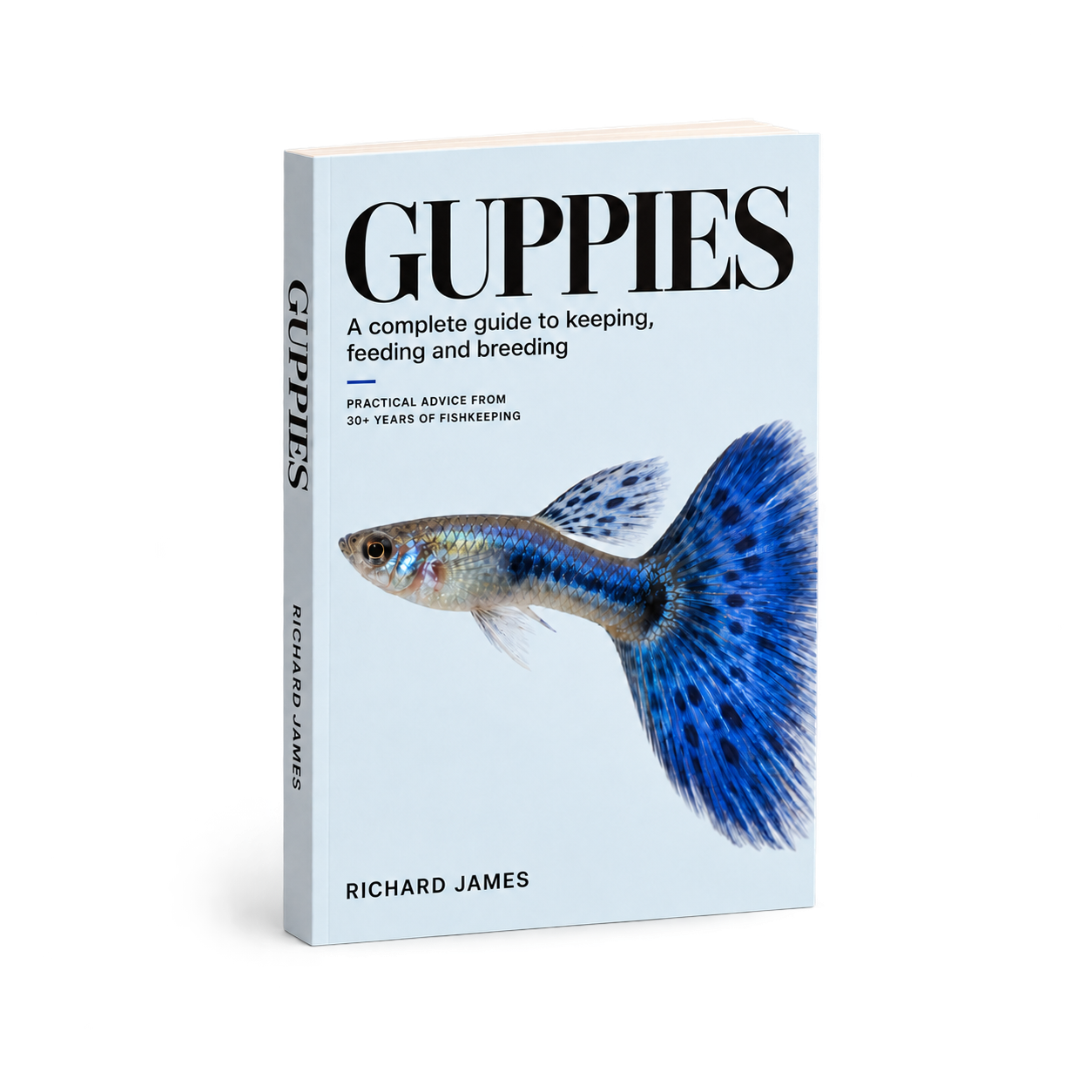
That is the approach I take in Guppies: helping you understand the aquarium, so you can make better decisions for the fish in front of you. Take a look at the 198-page eBook for feeding, everyday care, breeding and more—or try the free sample first.