If your guppy has just had babies, give the fry somewhere to hide, check that the filter intake is safe and offer a tiny amount of suitable food. You do not automatically need to move them. A mature, well-planted aquarium can be a better starting point than a hurriedly filled, uncycled tank.
One moment you are looking at your guppies. The next, something barely larger than a pair of eyes darts out from behind a plant.
Then you spot another one.
Finding your first guppy babies is exciting, but it can also leave you wondering whether you should be catching fish, buying equipment or doing something immediately. Start with a look at the aquarium. What the babies need most is safety, clean water and food they can actually eat.
Give the babies somewhere to hide
Adult guppies can eat newborn fry. That includes their mother. Guppies do not look after their young, so don't expect her to keep the other fish away.
Floating plants, mosses and dense, fine-leaved plants give the fry places the adults cannot easily follow. Cover near the surface is particularly useful because you will often find newborns amongst floating roots and leaves.
If you already have plenty of planting, resist the temptation to pull everything apart to count the babies. You may be removing their hiding places whilst trying to help them.
Cover improves their chances. It doesn't guarantee that every fry will survive, especially in an aquarium with other fish.
Decide how many you want to raise
This is the decision that shapes everything else.
If you would be happy to raise a few youngsters, leaving them in a well-planted main aquarium can work well. Watch that they are getting food and that the adults are not able to reach every hiding place.
If you want to raise most of the brood, a separate, properly prepared rearing aquarium gives you more control. It needs an established biological filter, suitable temperature and stable water conditions. A mature sponge filter is particularly useful because it provides gentle filtration without an exposed suction intake.
A new container filled with water is not the same thing as a cycled aquarium. Moving fry out of reach of the adults only to put them into deteriorating water is not much of a rescue.
Breeder boxes can provide temporary protection, but they need adequate water movement and careful cleaning. They are not a good long-term home for an entire growing brood.
Check the filter intake
An intake that causes no trouble for adult guppies may be a problem for newborns.
If your filter has an exposed intake, a suitable aquarium pre-filter sponge can help stop fry being drawn in. Check it regularly because trapped debris can reduce flow. Keep the filtration running; switching it off removes an important part of the aquarium's life-support system.
Offer their first meal
Guppy fry are ready to feed soon after birth. You do not need to wait several days.
Good-quality tropical flake crushed into a fine powder is a simple starting food. Offer a very small amount near where the babies are sheltering and watch for them taking it. Specialist fry food and newly hatched brine shrimp are other options.
For fry you are actively raising, around three to five very small meals spread through the day can work well. Three manageable feeds are more useful than an ambitious timetable you cannot maintain. Do not make up for fewer feeds by adding one enormous portion.
Read the guide to feeding guppy fry for food choices, portions and a realistic routine.
Keep an eye on the water—and the future
Remove uneaten food carefully and check ammonia and nitrite; both should remain undetectable. Use partial water changes with dechlorinated, temperature-matched water as needed to keep conditions good. A narrow siphon helps with spot cleaning, but watch where the babies are and check the bucket before emptying it.
How much extra maintenance you need depends on the aquarium. A few fry in a mature planted tank are very different from forty youngsters receiving several meals a day in a small rearing tank.
Those youngsters will also need somewhere to live as they grow. Think about space and rehoming now. Removing the males does not necessarily stop the next brood: previously mated females can store sperm.
Make the next stage easier
The first surprise is finding the babies. The next is how quickly they change the aquarium.
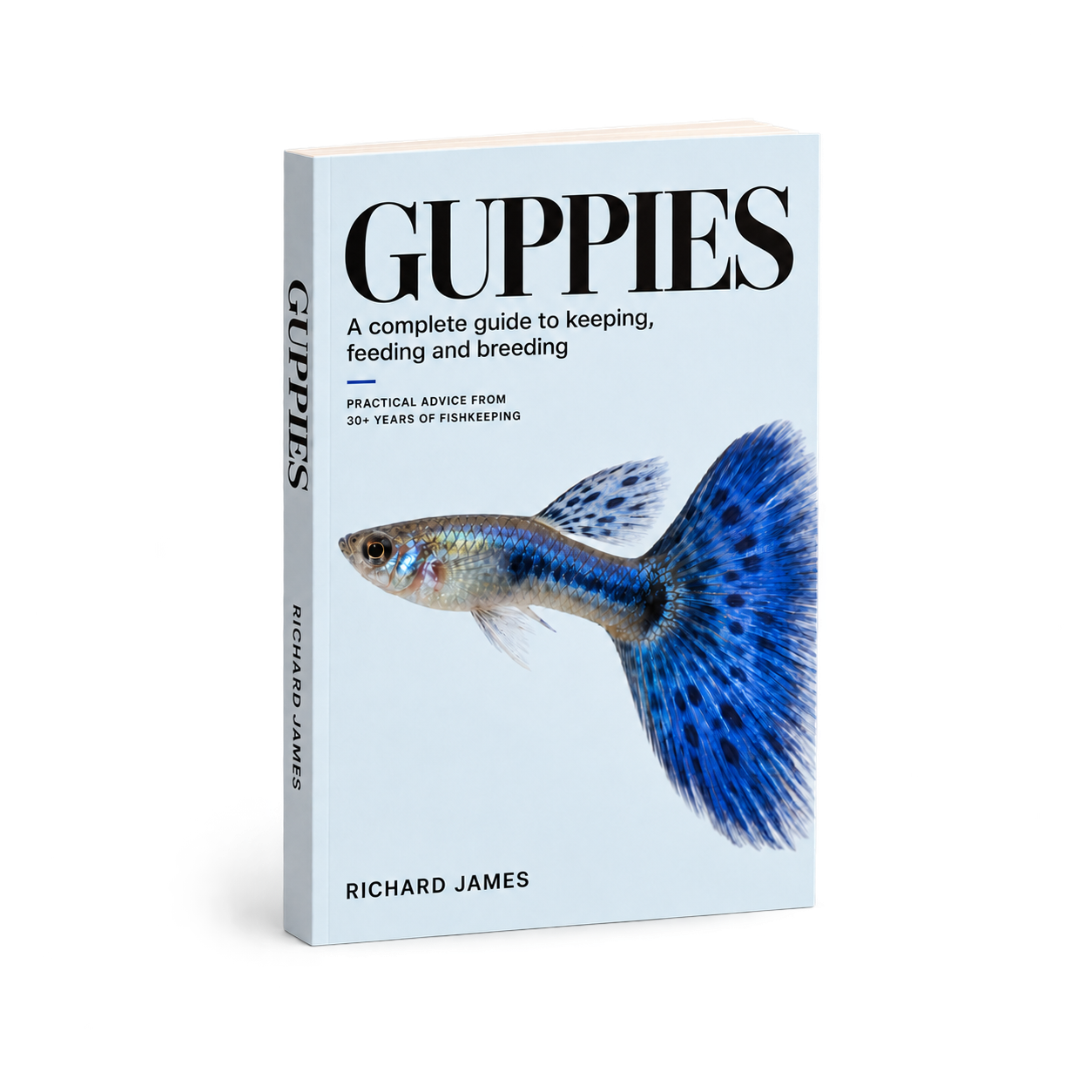
I wrote Guppies to help you make sense of the whole process, from choosing your fish and getting their water right to feeding, raising fry and managing a growing population. If you want one guide you can return to as those babies develop, take a look at the 198-page eBook.
You can also read a free sample before choosing your copy.