Guppies can share an aquarium with peaceful fish that suit the same water, temperature and available space. Platies are one option worth investigating; mollies and swordtails need more room and careful planning. Avoid choosing companions solely because a label says “community fish”—adult size, fin-nipping and water hardness matter too.
You don't have to add another species. A well-planned group of guppies can make an interesting aquarium on its own, particularly when you leave room for their behaviour rather than filling every level with fish.
Start with the water you actually have
Guppies generally suit moderately hard to hard water and a neutral to moderately alkaline pH. The easiest companions are fish that genuinely suit those conditions too.
A fish that prefers very soft, acidic water may be peaceful but still be a poor match. Don't create an awkward compromise because two colourful species looked appealing in adjacent shop tanks.
Check the requirements of the exact species, not just the common group name. Test your own water before drawing up a shopping list.
Consider other livebearers carefully
Platies can be a useful starting candidate because their needs broadly overlap with guppies. They are larger and chunkier, however, so leave adequate room and account for the extra feeding and waste.
Mollies are not simply guppies with bigger bodies. Species and varieties differ in adult size, and they need suitable mineral-rich water and a spacious setup. Swordtails also need more swimming room than a small guppy aquarium may provide.
If both sexes are present, several livebearer species can produce young in the same aquarium. Plan the population you may have in a few months, not just the one in today's shopping bag.
Be cautious with fins and mouths
Fancy guppies' flowing fins can attract nipping. Tiger barbs would not be my first choice, and some other supposedly peaceful fish can become troublesome if cramped or kept in unsuitable groups.
Large predatory fish may eventually see guppies as food, even if the juveniles sold beside them look harmless. Research adult behaviour and size before purchase.
Bettas are not a reliable default companion for fancy guppies either. Behaviour varies, and displays, chasing or fin damage can make the combination difficult. A reassuring photograph of somebody else's tank isn't a guarantee for yours.
What about tetras and bottom dwellers?
“Tetra” is not a compatibility specification. Some species are more inclined to nip than others, and many favour softer water. Check the individual species and whether its needs overlap with your aquarium.
The same applies to Corydoras and loaches. Peaceful behaviour alone is not enough; temperature, hardness, social group requirements and floor space still count.
A bottom-dwelling group doesn't add zero stocking load because it swims below the guppies. It also needs suitable food. Don't buy fish on the assumption that they can live entirely on leftovers and keep the tank clean for you.
Will shrimp and snails work?
Suitable snails may be an option, but identify the species and meet its needs. They still contribute waste and are not a substitute for maintenance.
Adult dwarf shrimp may coexist with guppies in a planted aquarium, but small shrimplets are at risk of being eaten. If your main goal is breeding shrimp successfully, a guppy community is not a dependable nursery.
Guppy fry are vulnerable to many otherwise peaceful tank mates too. Dense cover or a prepared rearing aquarium may be needed if you want to raise them.
Check the whole plan before adding anything
Write down the proposed species, adult sizes, group sizes, temperature and water requirements. Compare that with the actual aquarium and its current inhabitants. If it only works by choosing the extreme edge of every species' range, reconsider it.
Quarantine additions in an appropriately prepared setup where possible, introduce stock cautiously and monitor water and behaviour afterwards. Tank capacity is not fixed by the filter label.
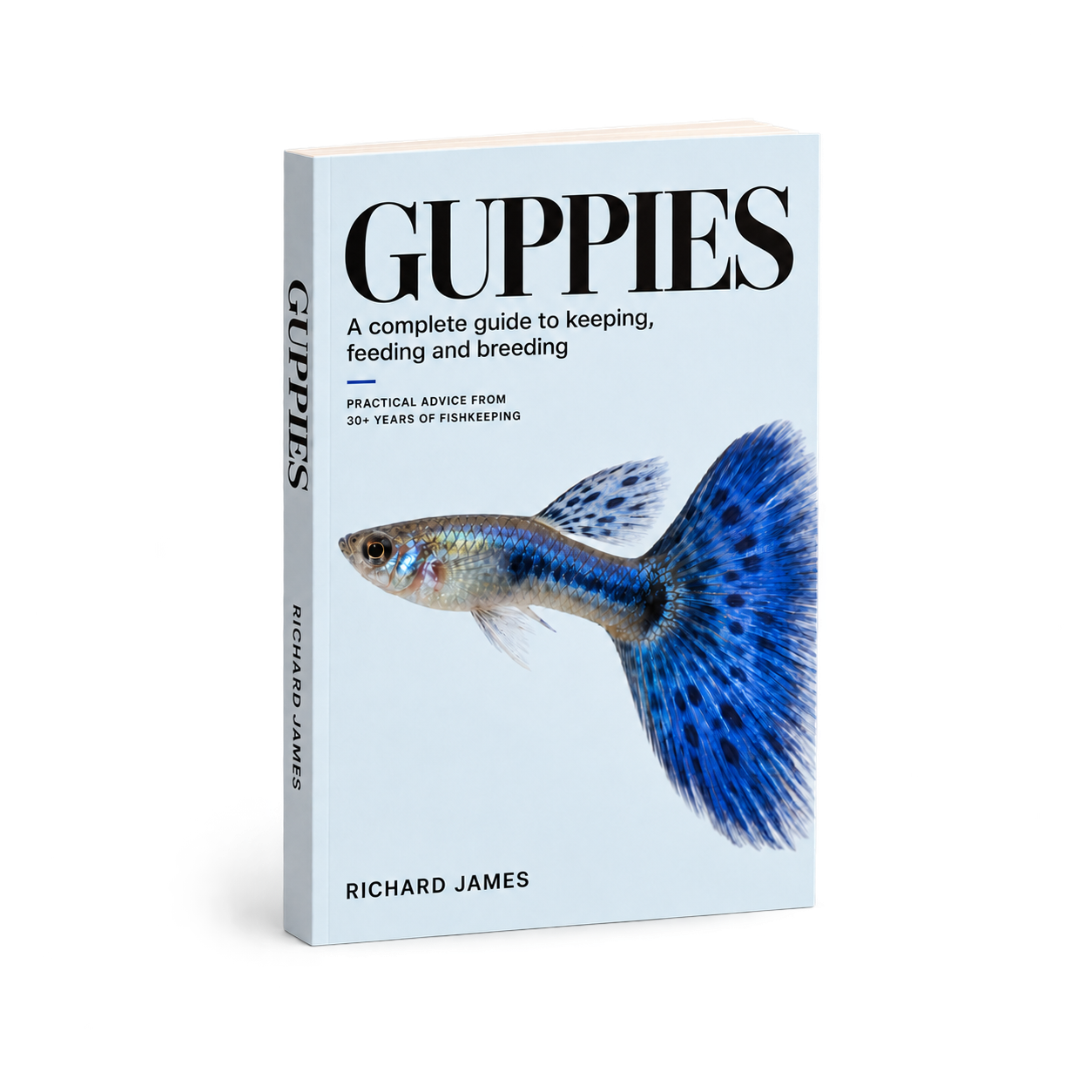
In Guppies, I look at the aquarium as a whole: choosing fish, their water, feeding and what happens when they breed. That makes a more useful starting point than a long list of supposedly perfect companions.