The clearest way to tell an adult male guppy from a female is to look at the anal fin underneath the rear half of the body. A female has a broad, fan-shaped fin. A mature male has a narrow, pointed gonopodium. Colour and body shape provide useful supporting clues, but are less reliable on their own.
It is tempting to call the bright fish males and the plain fish females. Quite often, you would be right. Unfortunately, “quite often” is not especially helpful if you are trying to buy a male-only group or keep control of your breeding.
The fin underneath the fish will tell you more than its colour scheme.
Find the anal fin first
Watch the guppy side-on whilst it is swimming normally. Look underneath the rear half of the body, behind the belly and before the tail.
You are looking for the anal fin, not the large tail fin at the very back.
In a female, it spreads into a small fan. In a mature male, it has developed into a long, narrow structure called the gonopodium, which is used to transfer sperm during mating.
There is no need to catch the fish to examine it. A clear side-on photograph or a short video that you can pause may make it easier to see. Give yourself more than one view; fins can be held close to the body, and a poor angle can make any identification harder.
Use these other clues to support what you see
| Feature | Adult male | Adult female |
|---|---|---|
| Anal fin | Narrow, pointed gonopodium | Broad, fan-shaped fin |
| Body shape | Usually slimmer | Usually deeper and fuller |
| Size | Usually smaller | Usually larger |
| Colour | Often more colourful, especially in fancy strains | Often less colourful, although some have plenty of colour |
| Gravid area | No female gravid area | May show a darker area near the rear of the abdomen |
Compare fish of similar maturity where possible. A young female will not necessarily be larger than an older male, and colour varies considerably between strains.
Treat the table as a set of clues, with the mature anal fin doing most of the work.
Can female guppies have colourful tails?
Yes. Domestic female guppies can have colourful tails and markings on their bodies. A colourful fish is not automatically male.
The reverse matters too. A young male may still look relatively plain before its adult colour and fins have developed.
If colour and fin shape seem to disagree, take another careful look at the anal fin. Do not decide solely from the brightest patch on the fish.
What about the dark spot on a female?
Some females show a darker area near the rear of the abdomen, known as the gravid spot. It can be a useful supporting feature, but its appearance varies and it may be difficult to see in dark fish.
It is also not a reliable birth countdown. A visible spot does not tell you that babies will arrive tomorrow. If pregnancy is what you are trying to establish, read the guide to pregnancy signs.
When can you sex young guppies?
It becomes easier as they develop. Young males gradually become more colourful and their anal fin narrows into the gonopodium. Females retain the broader fin and generally develop a fuller body.
There is no single age at which every youngster becomes equally easy to identify. Development varies, so a plain fish with an apparently broad fin should not be labelled female with complete confidence just because another youngster already looks male.
Check more than once as they grow. If keeping the sexes separate matters, one overlooked male can upset the plan. Do not wait for every male to develop a spectacular adult tail before paying attention to the fins.
Why getting the sexes right matters
If you keep mature males and females together, you should plan for babies. If you choose males only, you avoid pregnancies within the group, but still need to watch for chasing and ensure that every fish can feed and rest.
A female-only group is not necessarily baby-free. Females previously kept with males can store sperm and produce further broods after separation. Correctly identifying them as female does not tell you whether they have already mated.
Knowing which fish you have helps you plan the aquarium. It does not remove the need to watch how that particular group behaves.
Choose your group with the next few months in mind
Sexing a guppy is a small skill with a big effect on what happens next: whether you manage an all-male display, care for pregnant females or find yourself raising a growing brood.
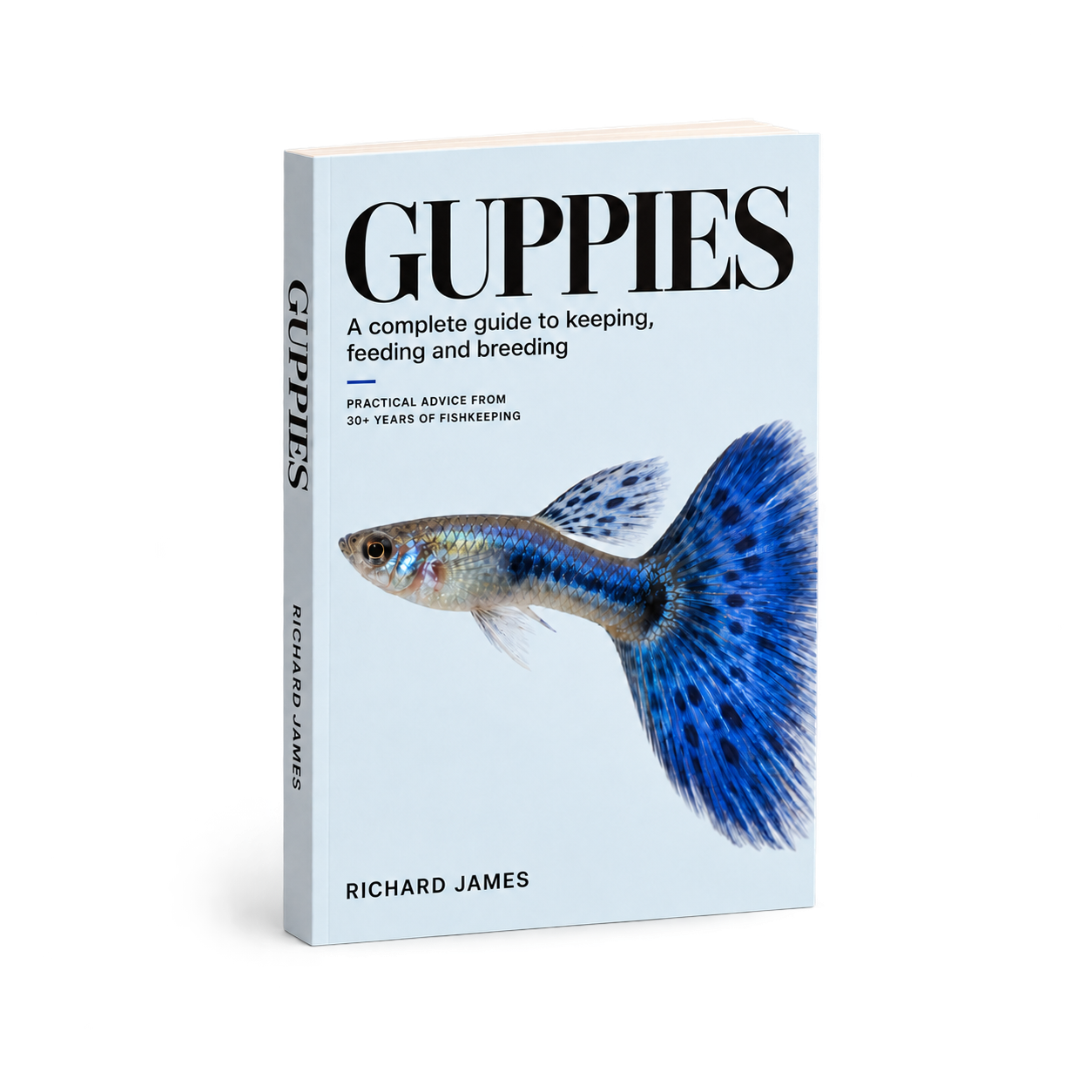
In Guppies, I cover choosing your fish as well as their setup, feeding, behaviour and breeding, so those decisions fit together. Explore the complete eBook if you want help planning beyond the fish-shop purchase. You can also read a free sample before deciding.