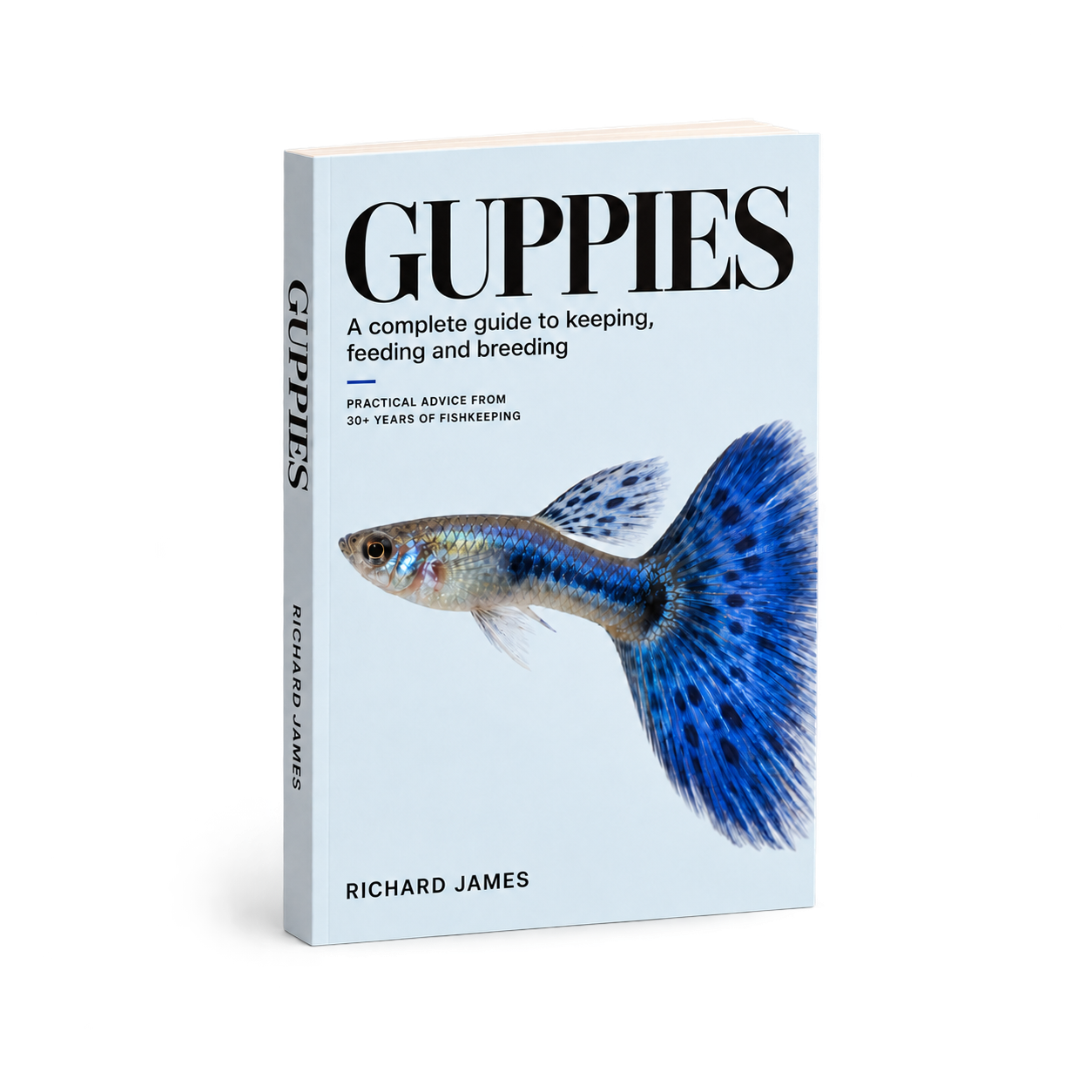
Yes. A male-only guppy aquarium can be a colourful, manageable way to enjoy the fish without repeated broods. The important conditions are enough space, suitable water, a carefully chosen group and watching for persistent harassment. Removing females removes breeding; it doesn't remove every social disagreement.
For somebody who wants a display rather than a breeding project, this is an arrangement worth considering before buying the first fish.
Why choose males only?
Male guppies offer plenty of colour and tail variety. You can enjoy those differences without having to plan around a new batch of fry every few weeks.
That makes stocking more predictable. You still need ordinary maintenance, but the population is not continually growing behind the plants.
A female-only group doesn't offer the same certainty. Females that have previously mated can store sperm and produce young later. A group that truly consists only of males cannot produce a brood.
Make sure you are buying males
Check the anal fin beneath the rear part of the body. In an adult male it is elongated into a narrow gonopodium; in a female it remains broader and fan-shaped.
Colour alone is not enough. Some females are colourful, and immature fish can be harder to identify. Ask the supplier to check the group with you rather than selecting solely by tail pattern.
Our male-or-female guide explains the clues. Recheck developing youngsters if you are raising your own group, because their adult differences emerge gradually.
How many should you keep together?
Plan a small social group in a suitable aquarium rather than keeping one male alone as the solution to limited space. For a first setup, around 60 litres or more is a sensible starting point from the book.
There is no group size that guarantees peace. Five or six males may be a modest starting example for an appropriately prepared tank, but dimensions, fish size, existing occupants and filter maturity still matter.
Don't add extra fish just to spread aggression if the aquarium has no spare capacity. Stocking decisions need to account for waste and swimming space as well as behaviour.
Is chasing normal?
Occasional displaying and brief chases can be part of normal interaction. Look at what happens afterwards: can every fish swim freely, settle and feed?
Persistent targeting is different. A male that hides most of the day, cannot reach food or repeatedly develops fin damage is not simply taking part in harmless play.
Watch the tank for several minutes, including at feeding time. One glance when you switch on the light can miss a pattern that continues for the rest of the day.
Make the layout work for the fish
Use plants and suitable decorations to interrupt long sight lines, while leaving open swimming areas. That gives fish opportunities to move away rather than remaining constantly visible to a persistent pursuer.
Avoid sharp decorations around elaborate fins. Keep the current manageable too; a large-tailed male should not spend all day fighting the outlet.
If one fish continues to be bullied, act on the situation. A properly prepared separate aquarium or suitable rehoming may be necessary. Adding females as a quick distraction brings breeding and possible harassment of the females into the problem.
Does the group need different care?
The basic requirements remain the same: mature filtration, appropriate temperature and mineral content, sensible feeding and regular testing. Male-only does not mean maintenance-free.
Likewise, adding another species still requires compatibility checks. Tank mates must suit the water and leave those fins alone.
If your aim is a colourful aquarium you can understand and enjoy, a male-only group is a good option to explore. Guppies connects choosing the fish with the setup, feeding and behaviour that will matter after you bring them home.