For a first guppy aquarium, I would start with around 60 litres (roughly 16 US gallons) or more. A rectangular tank of 75–90 litres gives you extra room for planting, swimming and managing a small group. That is a sensible starting recommendation, not a promise that any particular number of fish will fit.
Guppies are small. That doesn't mean the best home for them is the smallest aquarium on the shelf. The useful question is whether the tank makes their lives—and your maintenance routine—easier.
Why I recommend starting around 60 litres
A larger volume of water gives you more room for error. A little excess food has a greater effect in a tiny aquarium than in a more generous one. Temperature and water quality can also change more quickly in small volumes.
You still need a mature filter, sensible feeding and regular maintenance. Extra water doesn't do those jobs for you. It simply makes the whole arrangement less unforgiving whilst you learn what your aquarium needs.
If you can accommodate 75–90 litres, I would seriously consider it. You gain flexibility without needing an enormous display tank, and you are less likely to wish you had bought something larger a month later.
Look at the length, not just the litres
Given two tanks of similar volume, I would usually choose the longer rectangular one over a very tall, narrow design. Guppies use horizontal swimming space. Extra height cannot entirely replace it.
Leave open areas between plants and decorations. A tank packed so tightly that the fish have to weave through ornaments all day has lost much of its useful space. Planting around the sides and back can provide cover without filling the whole aquarium.
Check that the lid fits properly, including around equipment. Guppies can jump, particularly when startled or chased.
Can guppies live in a smaller tank?
Experienced keepers sometimes manage smaller aquariums for specific purposes. That doesn't make a small tank the easiest permanent home for somebody starting out.
If you already own one, first establish its actual volume, dimensions, filtration and occupants. Don't add a group of guppies just because a shop label says “nano fish”. A larger home may be the better next purchase.
Nor would I solve limited space by keeping one guppy alone. These are social fish. Plan an aquarium around a suitable group rather than reducing their social needs to fit the container.
Leave room for the fish you will have later
Adult females grow larger than males, and a mixed group may soon produce fry. Six adults and a growing brood are two very different stocking situations.
Decide whether you want to breed before choosing the aquarium. If you don't, a male-only group can avoid the repeated arrivals. Previously mated females can still produce young after males have been removed.
Tank mates use capacity too. Bottom-dwelling fish aren't free additions simply because the guppies swim higher up. Our guide to stocking guppies explains why a litres-to-fish formula is not enough.
The tank must be ready as well as large enough
A new 90-litre aquarium with an immature filter can still develop dangerous ammonia and nitrite. Complete a fishless cycling process and check that the filter can process its ammonia source before introducing fish; empty water showing zero ammonia proves very little.
Choose the tank, then build the routine around it: suitable filtration, stable temperature, testing and water changes. Read what a guppy filter needs to do before buying equipment.
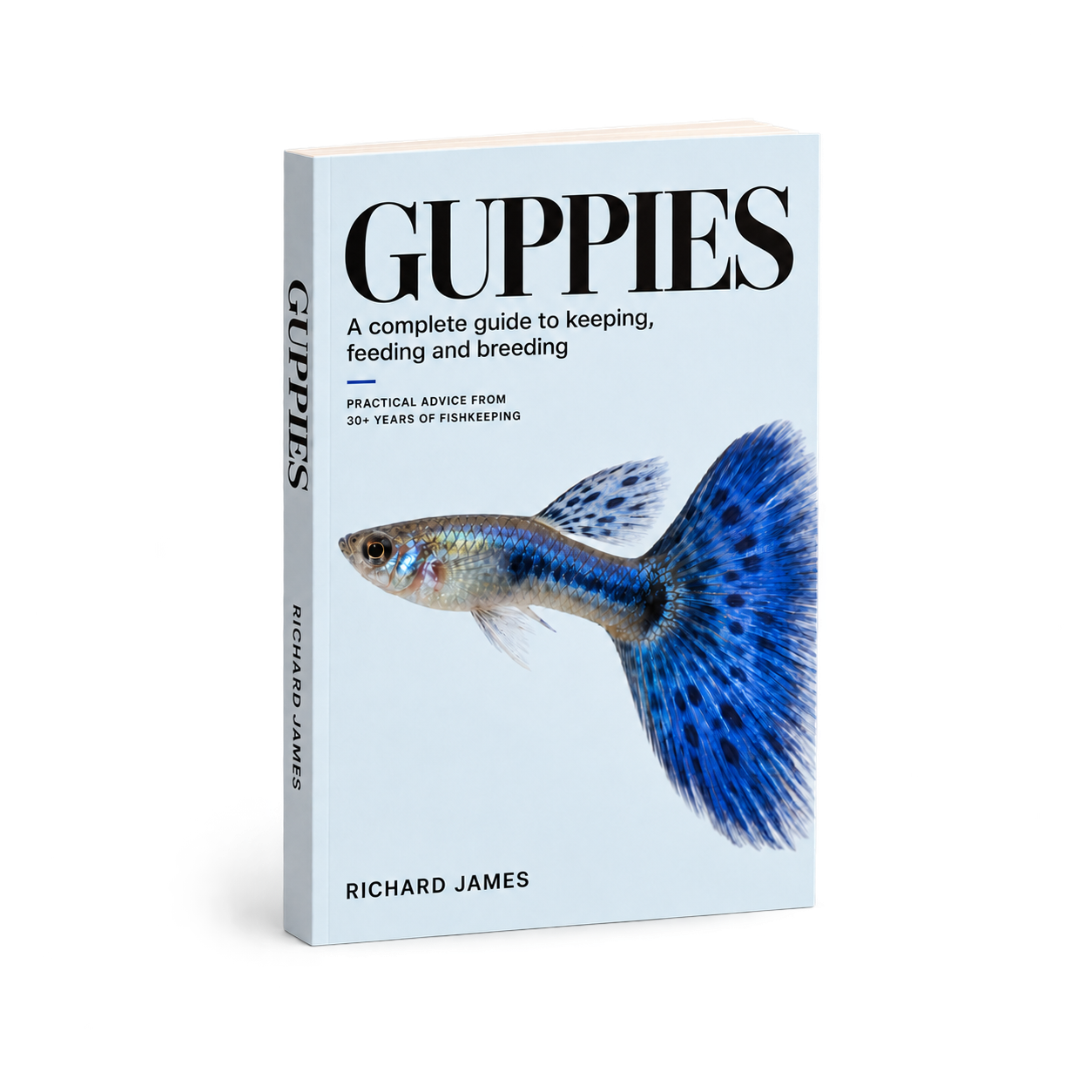
My book, Guppies, connects these decisions with choosing your fish, feeding and breeding. If you're putting your first aquarium together, it gives you one place to return to as the questions arise.